
Reboilers are essential components in distillation columns, providing the heat required to vaporise liquid from the column bottom and maintain the separation process. Selecting the right reboiler design directly impacts efficiency, energy consumption, and maintenance costs.
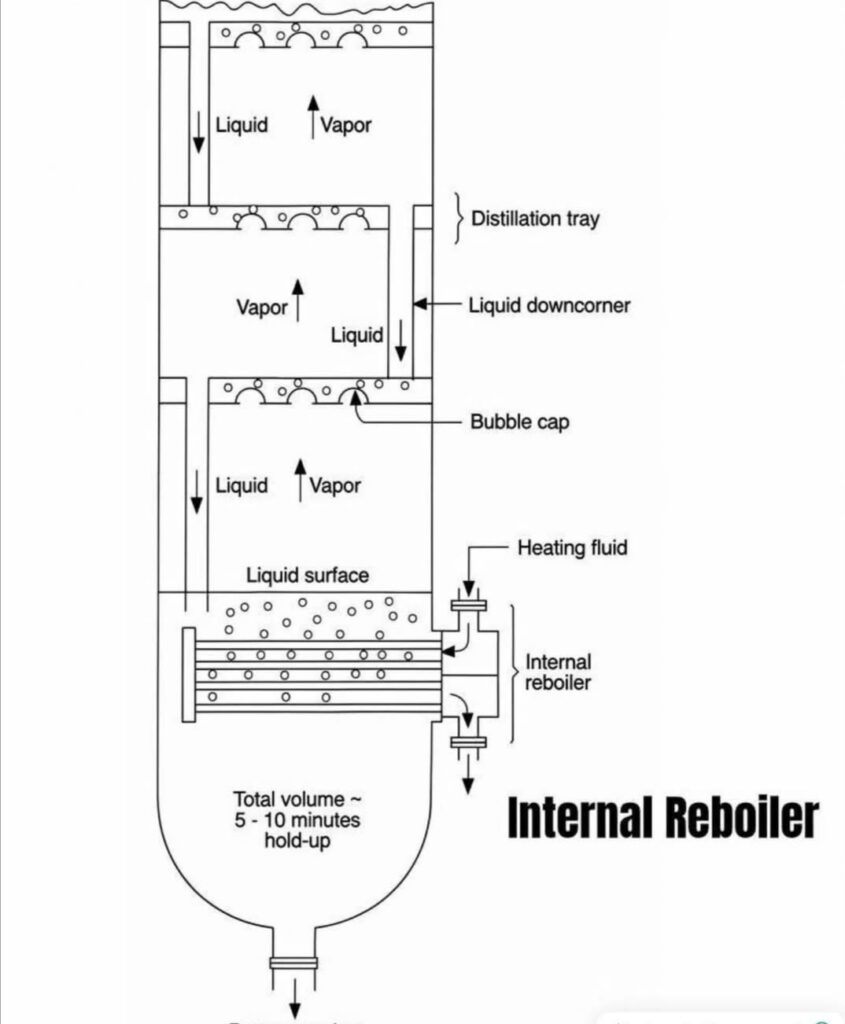
1. Internal Reboilers
Installed inside the distillation column, where boiling occurs directly in the bottom liquid section. Their compact design makes them suitable for specialised applications such as air separation units, often combined with high-efficiency heat exchangers like Plate-Fin and PCHE systems.
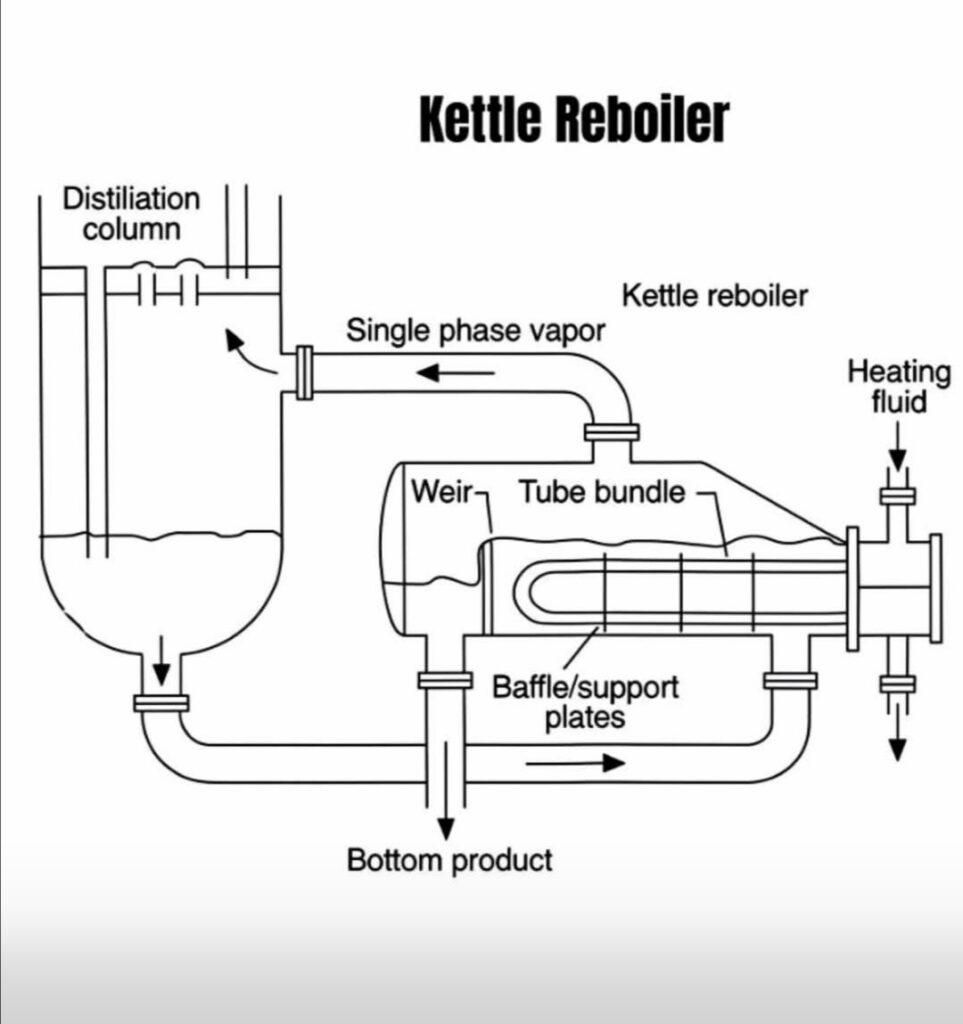
2. Kettle Reboilers
One of the most widely used designs in refining and chemical industries. Liquid from the column bottom surrounds a bundle of horizontal tubes, generating vapour that returns to the column. They offer reliable operation and simple control but may experience fouling and scaling over time.
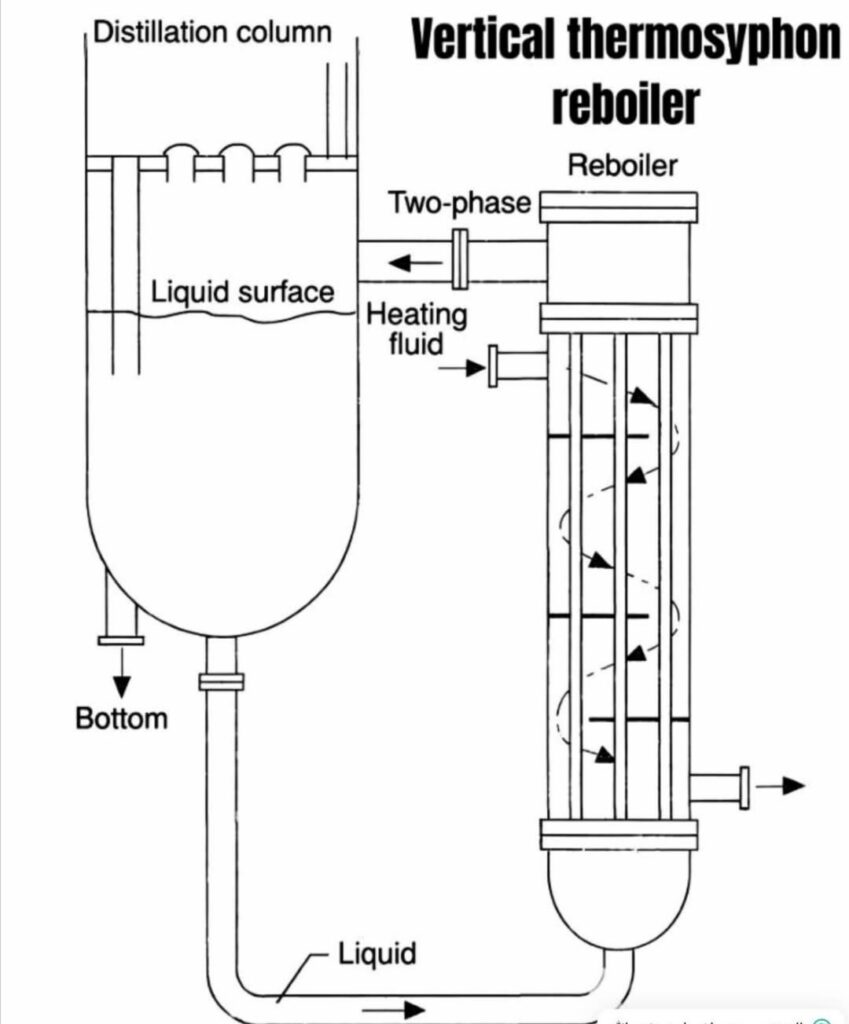
3. Vertical Thermosyphon Reboilers
Operate using natural circulation driven by density differences between liquid and vapour-liquid mixtures. They provide excellent heat transfer efficiency and lower fouling rates without requiring circulation pumps. However, they need sufficient elevation to maintain natural flow.
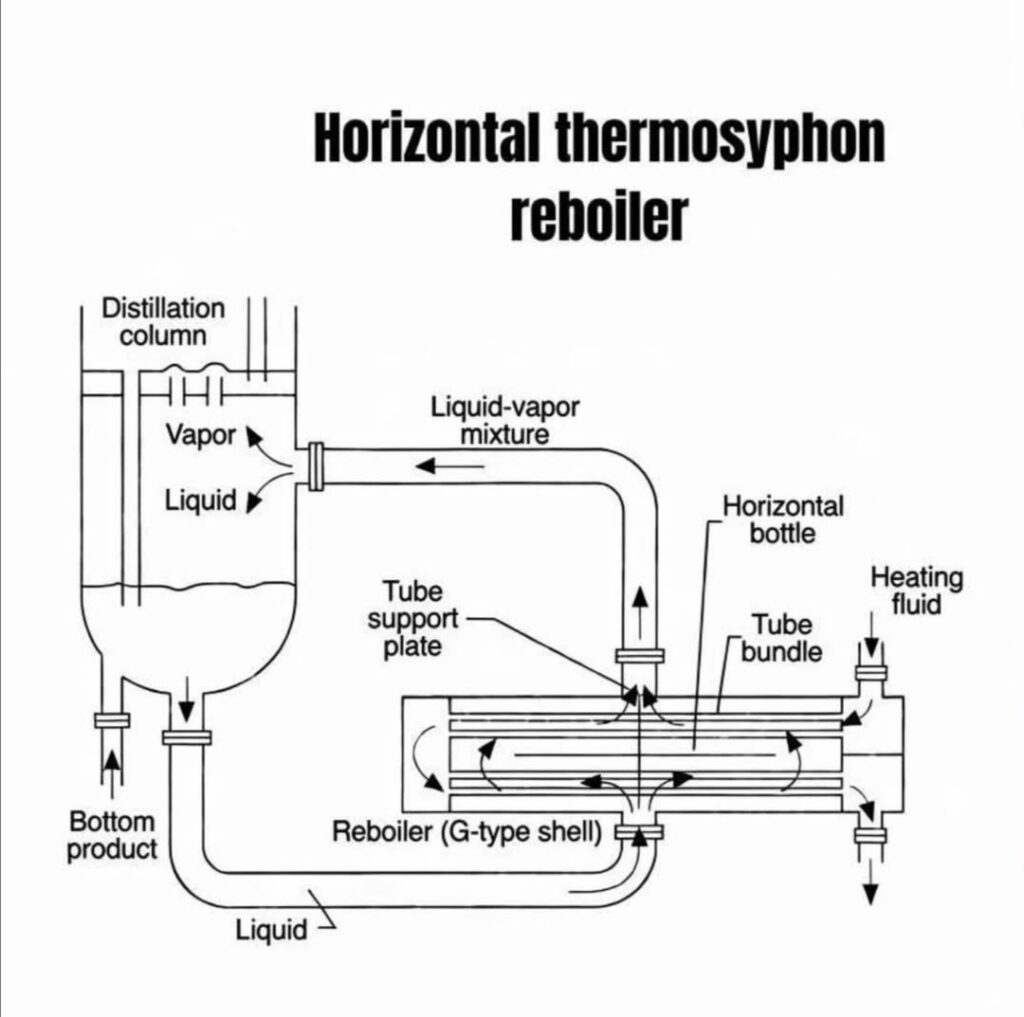
4. Horizontal Thermosyphon Reboilers
Use the same natural circulation principle as vertical thermosyphons but require less installation height. They are a practical solution where space is limited, although predicting heat transfer and fouling behaviour can be more challenging.
Conclusion
Each reboiler type serves specific process requirements. Kettle reboilers are valued for simplicity and reliability, thermosyphon reboilers for efficiency and reduced energy consumption, while internal reboilers are preferred in compact and specialised applications. Choosing the right design is critical for achieving safe, efficient, and cost-effective distillation operations.
Anchor Marine Engineering Co.
Engineering excellence begins with understanding the right equipment for the right application.